Blog

Every fundraising campaign generates financial records, sponsorship documents, donor communications, contracts, and other information that may become important long after an event or campaign has ended.
Well-organized recordkeeping can help nonprofits respond to audits, satisfy grant reporting requirements, answer donor questions, and demonstrate compliance with legal and financial obligations.
While the types of records and recommended retention periods vary, establishing consistent documentation practices can help organizations stay organized and reduce unnecessary risk.
Why Recordkeeping Matters Beyond Tax Compliance
Many nonprofit leaders associate record retention with tax filings, but these records often serve a much broader purpose. Maintaining organized documentation can help your organization:
- Prepare for financial audits
- Complete grant reporting requirements
- Demonstrate accountability to your board
- Respond to donor questions
- Verify sponsorship commitments
- Resolve contract or payment disputes
When records are complete and easy to locate, nonprofits can spend less time searching for documents and more time focusing on their mission.
Donation Records Every Nonprofit Should Maintain
Every donation should be supported by accurate documentation, regardless of whether the gift was made online, by check, or during a fundraising event.
Important records often include:
- Donation amount
- Date the contribution was received
- Donor name and contact information
- Payment method
- Gift restrictions or designated purpose
- Donation receipts and acknowledgment letters
Keeping this information organized can help verify contributions, support financial reporting, and answer questions that may arise months or even years later.
Keep Supporting Documents for Fundraising Events
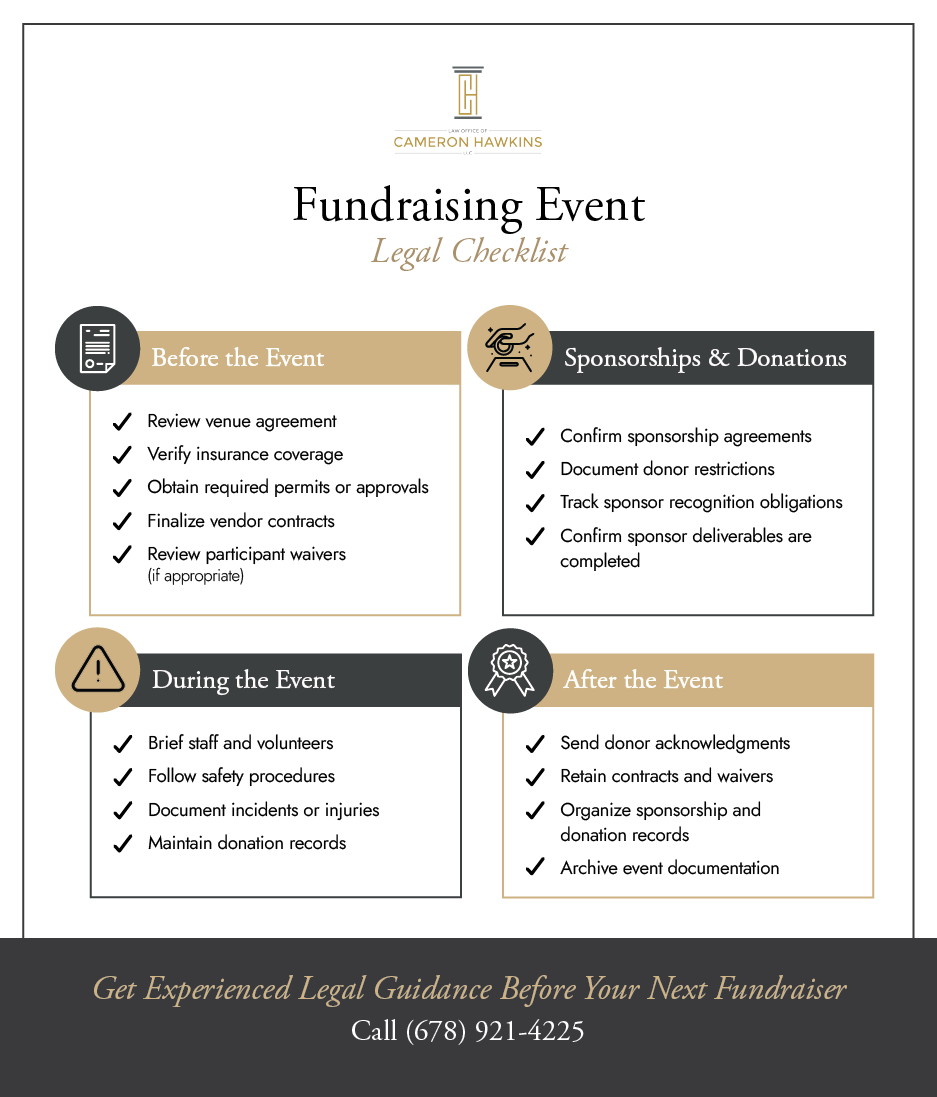
Maintaining supporting documents can help nonprofits keep track of what was promised, what occurred during the event, and how responsibilities were allocated. Examples include:
- Sponsorship agreements
- Vendor contracts
- Venue agreements
- Insurance documentation
- Permits or event approvals
- Volunteer records
- Event budgets
- Promotional materials and marketing assets
Financial records are only one part of the story. Supporting documents can help explain how a fundraising event was planned and executed, what obligations each party agreed to, and how sponsorship or vendor relationships were managed.
Maintaining these records alongside your financial documentation creates a more complete picture if questions arise from donors, sponsors, auditors, or board members in the future.
Maintain Documentation for Grants and Restricted Donations
Restricted donations require more documentation than ordinary unrestricted gifts. If a donor gives money for a specific program, scholarship fund, building project, campaign, or event purpose, the nonprofit should be able to show both the restriction and how the funds were handled.
Important records may include:
- Written donor restrictions
- Gift agreements
- Campaign materials describing the intended use of funds
- Board approvals or internal notes
- Spending records tied to the restricted purpose
- Communications with the donor
These records help connect the original gift to its approved use. Without clear documentation, restricted donations can create confusion during audits, leadership transitions, donor questions, or internal financial reviews.
Develop a Consistent Record Retention Process
Having the right documents is only part of effective recordkeeping. Nonprofits also benefit from establishing consistent procedures for organizing, storing, and managing those records.
A record retention process may address:
- How documents are organized
- Whether records are stored digitally or physically
- Who has access to sensitive information
- How records are backed up
- When records should be reviewed or archived
Certain financial, legal, and tax records may need to be retained longer than others, making it helpful for nonprofits to establish a written record retention policy that reflects their operational and legal obligations.
Organized Donation and Fundraising Records Can Help Protect Your Atlanta Nonprofit
Strong recordkeeping practices support transparency, accountability, and effective nonprofit management. Whether you're responding to a grant audit, documenting restricted donations, or reviewing sponsorship obligations, having complete and organized records can make those processes significantly easier.
At the Law Office of Cameron Hawkins, we help Atlanta nonprofits develop sound documentation practices, review fundraising and sponsorship records, and provide ongoing legal guidance as part of our general counsel services. By building strong recordkeeping procedures today, your organization can be better prepared for tomorrow's opportunities and challenges.
Learn more about donation and fundraising recordkeeping best practices by calling 678-921-4225 to schedule a consultation.