Blog

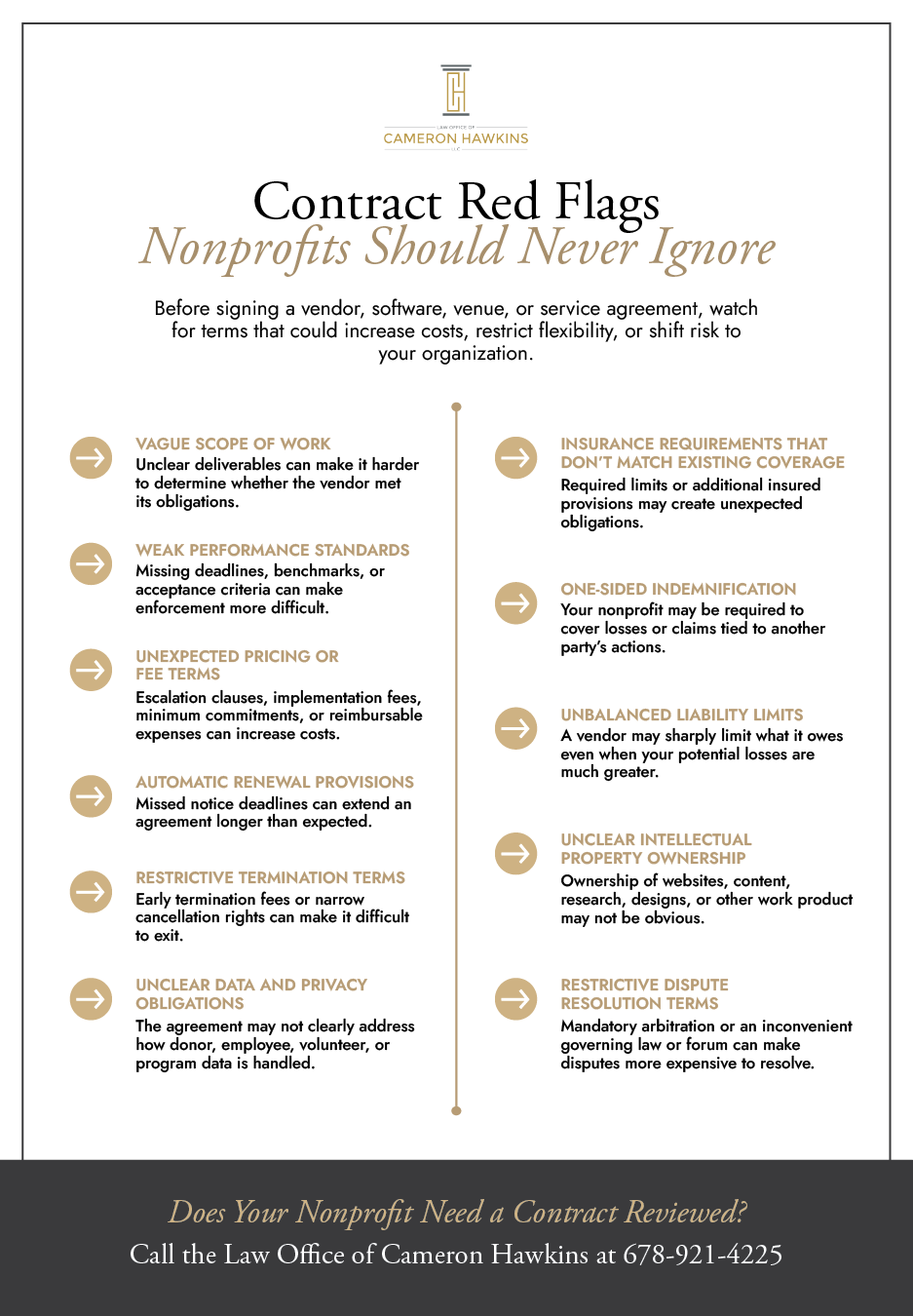
Many nonprofits rely on outside companies for software, fundraising support, payroll services, marketing, accounting, event management, and other essential functions. Most of these vendor relationships are governed by contracts, and those agreements often include an automatic renewal clause.
Auto-renewal clauses are not inherently unfavorable. In many cases, they provide continuity and reduce administrative burdens by allowing services to continue without requiring organizations to renegotiate contracts every year.
However, a clause that seems harmless when a contract is signed can become costly if the cancellation deadline is forgotten, overlooked, or lost during a staffing or leadership transition.
How Auto-Renewal Clauses Work
An auto-renewal clause generally allows a contract to continue for another term unless one party provides notice within a specified period.
For example, contract cancellation might require written notice 60 or 90 days before the end of the current term. If notice is not provided within that window, the agreement may automatically renew for another year.
These provisions are often found in:
- Software agreements
- Fundraising service contracts
- Marketing agreements
- Payroll and HR service agreements
- Equipment leases
- Event and venue contracts
Renewal provisions are easy to underestimate. A notice requirement that seems straightforward when a contract is signed may be forgotten years later, particularly after leadership transitions, staffing changes, or shifts in organizational priorities.
Why Nonprofits May Overlook Renewal Deadlines
Many nonprofits operate with limited administrative resources or experience leadership transitions. The executive director, development director, or operations manager who negotiated a contract may no longer work for the organization by the time the renewal period approaches.
In other cases, responsibilities simply shift over time. A contract that was originally managed by one department may eventually become the responsibility of another.
Renewal reminders and contract-related notices may be sent to email addresses that are no longer monitored or to employees who are no longer with the organization. In other cases, notices may simply be overlooked among competing administrative priorities.
Contract Terms That Can Create Additional Challenges
An auto-renewal clause rarely operates in isolation. Other provisions within the agreement may determine how easy or difficult it is to end the relationship.
Notice requirements are one example. Some agreements require cancellation notices to be submitted in writing, while others specify how notice must be delivered and where it must be sent.
The length of the renewal period can also affect flexibility. A month-to-month renewal creates different obligations than a contract that automatically extends for another year.
Termination provisions may create additional complications. Some agreements include cancellation fees, while others may require continued payment for services after the relationship has ended.
When Automatic Renewals Become a Problem
Contracts usually make sense when they're signed, but operational realities often change:
- Nonprofit leadership may need to reduce expenses after grant funding expires
- A nonprofit may want to switch software platforms
- A vendor's service quality may decline, or it may no longer provide the level of support the nonprofit needs
- Changing program priorities or organizational restructuring may make an existing third-party relationship unnecessary
Automatic renewal provisions are not always a problem in these situations, especially if leadership identifies them early enough to evaluate available options.
If a cancellation deadline is missed, the nonprofit may still have options. Depending on the agreement, leadership may be able to negotiate an early termination, pay a cancellation fee, modify the scope of services, or plan for cancellation at the next available date.
Helping Atlanta Nonprofits Avoid Contract Pitfalls
Even well-informed and detail-oriented nonprofit leaders can get blindsided by renewal provisions. They’re a common part of contracts and easy to take for granted, especially when they appear alongside other boilerplate terms. That can make strict cancellation deadlines, early termination penalties, or inflexible notice requirements easy to overlook.
The nonprofit attorneys at the Law Office of Cameron Hawkins can review significant contracts and identify provisions that may create future costs or complications. Call us at 678-921-4225 to discuss your contract review needs.