Blog

While nonprofit organizations are not always legally required to use written volunteer agreements, documenting the relationship can provide important benefits for both the organization and the volunteer. A well-drafted agreement helps:
- Define the volunteer's role and responsibilities
- Document the nature of the volunteer relationship
- Protect both the organization and the volunteer by setting clear expectations
- Promote consistency across volunteer programs
- Reduce misunderstandings regarding policies, responsibilities, or organizational procedures
A written agreement cannot eliminate every potential dispute, but it can provide a stronger foundation for managing volunteers consistently and supporting the organization's day-to-day operations.
Basic Volunteer Information
Every volunteer agreement should begin by identifying the parties involved and the specific volunteer role. Even simple information can become important if questions arise later about an individual's responsibilities or the scope of their service.
Basic information often includes:
- The volunteer's name
- The nonprofit's legal name
- The volunteer position or program
- The effective date of the agreement
- The department or supervisor, if applicable
Clearly identifying the role also helps avoid confusion when volunteers participate in multiple programs or serve in different capacities over time.
Volunteer Duties and Responsibilities
One of the most important sections of any volunteer agreement explains what the volunteer is expected to do. Clearly defining responsibilities helps both the volunteer and the organization understand the nature of the position, supports consistent supervision, and provides a basis for addressing conduct that falls outside the role or puts the organization at risk.
Depending on the role, this section may address:
- Primary volunteer duties
- Required training or orientation
- Who supervises the volunteer
- Expected schedules or time commitments
- Workplace conduct expectations
- Procedures for reporting concerns or requesting assistance
- Limits on the volunteer’s authority to act or speak on behalf of the organization
- Circumstances under which the nonprofit may end the volunteer relationship
Specific responsibilities are generally more helpful than broad descriptions. A well-defined role makes it easier to communicate expectations, enforce standards consistently, and respond when a volunteer’s conduct creates safety, operational, or reputational concerns.
Confidentiality, Safety, and Organizational Policies
Many volunteers have access to sensitive information, interact with vulnerable populations, or represent the organization during public events.
Volunteer agreements should explain the policies that apply while individuals are serving on behalf of the nonprofit.
Depending on the organization's activities, this section may address:
- Confidentiality obligations
- Protection of client, donor, or participant information
- Compliance with organizational policies
- Safety procedures
- Appropriate use of organizational property or technology
- Expectations regarding social media or public communications
Referencing existing organizational policies can help reinforce expectations while avoiding the need to repeat lengthy policy language within the agreement itself.
Expense Reimbursement and the Volunteer Relationship
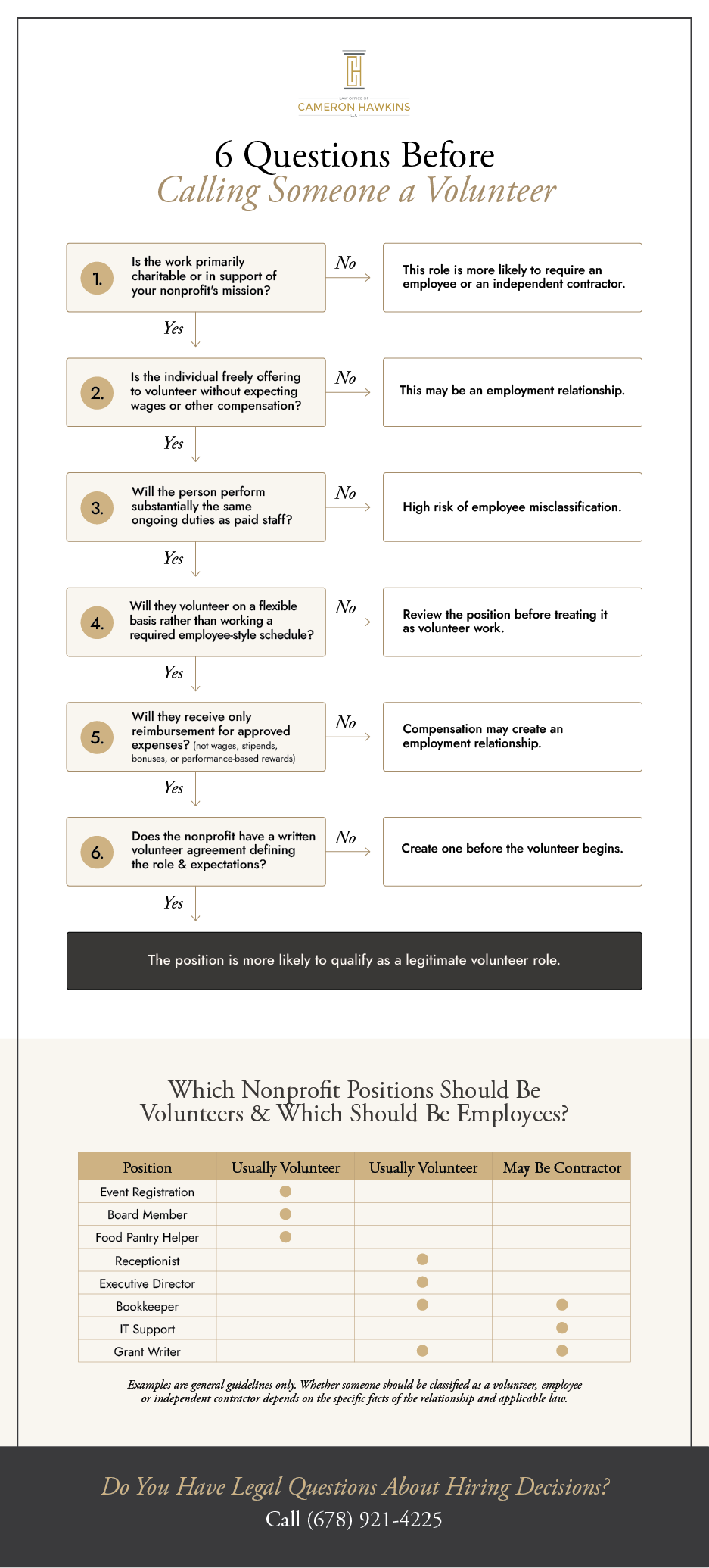
Many nonprofits reimburse volunteers for approved expenses incurred while serving the organization. Volunteer agreements should clearly distinguish expense reimbursement from wages, stipends, bonuses, or other forms of compensation to help avoid misunderstandings about the nature of the volunteer relationship.
Organizations often include language explaining that:
- Volunteer service is provided without wages or salary
- Approved expenses may be reimbursed when authorized
- Volunteers are not eligible for employee benefits
- The parties intend to establish a volunteer, rather than employment, relationship
- Volunteer service does not guarantee future employment
Clearly documenting these expectations can help reduce misunderstandings and reinforce the intended nature of the volunteer relationship.
Acknowledgments and Signatures
Before volunteer service begins, both the volunteer and an authorized representative of the nonprofit should acknowledge the agreement. Signed documentation demonstrates that expectations were communicated and accepted before work started.
Many nonprofits also ask volunteers to acknowledge that they have received or reviewed related organizational policies.
Depending on the nature of the volunteer role, organizations may also use separate documents for:
- Liability waivers
- Photo or media releases
- Background check authorizations
- Confidentiality agreements
- Vehicle use acknowledgments
Not every volunteer position requires every document, but organizations should evaluate which forms are appropriate based on the activities being performed.
Can Our Nonprofit Use a Boilerplate Volunteer Agreement?
A generic volunteer agreement may provide a starting point, but it may not address the specific responsibilities, risks, and expectations associated with a particular role.
The documentation needed for a one-day event volunteer may be very different from that needed for someone who works regularly with clients, handles confidential information, uses organizational property, supervises others, or provides skilled professional services.
Using the same form for every position can leave important issues unaddressed, including limits on authority, confidentiality obligations, reimbursement practices, safety requirements, and the circumstances under which the volunteer relationship may be ended.
Need Help Reviewing or Drafting Your Nonprofit Volunteer Agreements?
The Law Office of Cameron Hawkins helps Atlanta nonprofits draft, review, and update volunteer agreements, volunteer policies, and related documentation as part of ongoing general counsel services.
Call us at 678-921-4225 to discuss your situation during a consultation.